You walk out to the lot in the morning and see it again: glass on the ground, a tenant on the phone, and a car with a smashed window. Car prowls are a familiar problem across the Seattle area. They cost tenants money and time, and they make people feel unsafe where they live or work.
The good news is that most car prowlers are looking for an easy, quick target. If your lot or garage is bright, hard to get into, and likely to get them seen, many will move on. Here is what tends to help, in plain terms.
Why do car prowlers pick certain parking lots?
A car prowl is a break-in to a parked car to steal what is inside. The person doing it usually wants three things:
- Dark spots where no one can see them.
- Easy ways in and out, like an open gate or a garage door that stays open too long.
- Something worth grabbing, like a bag, a laptop, or even loose change in plain sight.
Our long, dark Seattle winters give prowlers more hours of cover. Rain also keeps people indoors, so fewer eyes are on the lot. That is why a lot that feels fine in July can have a problem in December.
Does better lighting really stop car break-ins?
Lighting is the first thing to look at. A research summary from the National Institute of Justice on parking garage design called lighting “the single most important” security feature for parking facilities. The Seattle Police Department also suggests motion-sensing lights to make parking spaces more visible on residential and business properties.
Simple steps that often help:
- Walk your lot at night and note every dark corner, stairwell, and back row.
- Replace burned-out bulbs and fix lights on timers that shut off too early.
- Add motion-sensing lights in spots that do not need to be lit all night.
- Make sure lighting covers the areas your cameras watch. A camera can only record what it can see.
How do I keep people out of my parking garage?
Many garage prowls start with someone simply walking in behind a car. SPD’s prevention tips point out that security doors should fully close behind vehicles, and suggest building managers shorten garage door timers so the door is not left open longer than needed.
Other ways to control who gets in:
- Check your gates and doors. Doors that do not latch, or gates that are propped open, undo everything else.
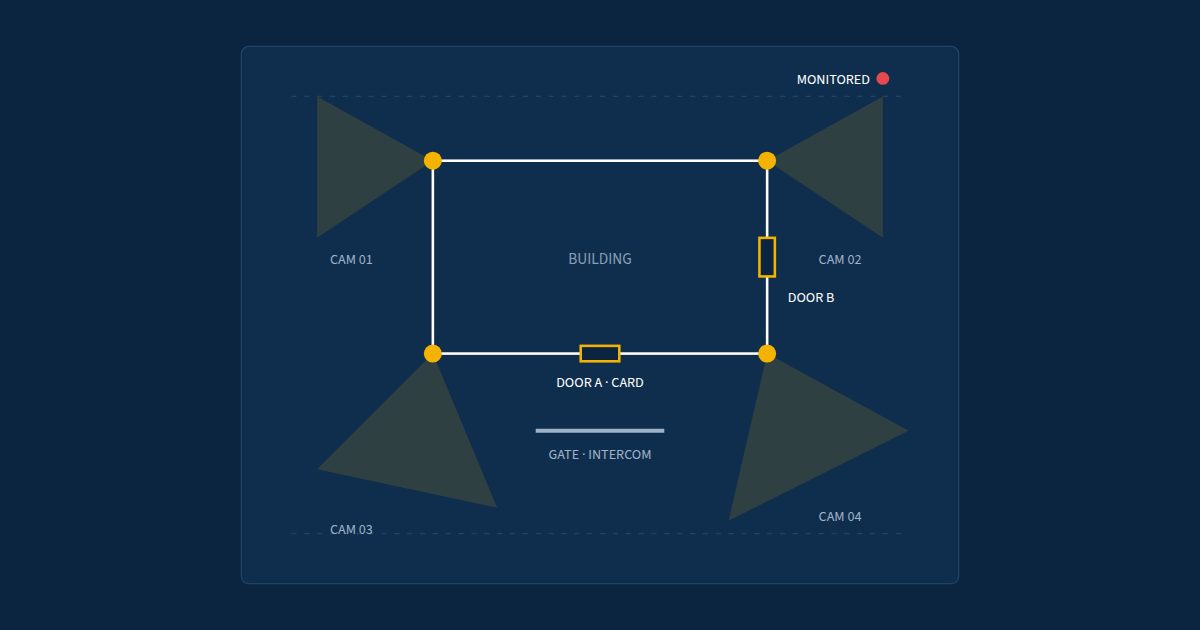
- Use access control. Access control means only people with a key fob, card, or phone credential can open a door or gate. It also keeps a log of which credential opened which door and when.
- Add an intercom at the gate. Visitors and deliveries can call in instead of waiting for someone to let them through.
- Close off side doors and stairwells so they only open from the inside, where your fire code allows.
Do security cameras stop car prowls?
Cameras help in two ways. First, visible cameras make some people think twice. Second, good video can help police and insurance if something does happen. But cameras on their own have limits. If no one is watching, the recording often just shows you what happened after the fact.
A few things make cameras much more useful in a parking area:
- Cover the entrances and exits. This is where you are most likely to get a clear view of a person or a vehicle.
- Pick cameras made for low light. Night and rain are when most problems happen here, so the cameras need to see well in the dark and wet.
- Mount them high and out of reach, so they are harder to knock out of place.
- Keep the lenses clean and check the view after storms.
What is remote video monitoring, and does it help parking lots?
Remote video monitoring means a security team watches for alerts from your cameras, day and night. When a camera spots someone in the lot after hours, the team looks at the live video to check if it is a real problem. If it is, they can speak through a speaker on site to tell the person they are being watched and to leave. If it is a real incident, they call the police.
This is the big difference from cameras that only record. Instead of finding broken glass in the morning, the goal is to interrupt the problem while it is happening. We explain this in more detail in our post on remote video monitoring vs. recorded cameras.
For many lots, the best plan pairs cameras and monitoring with access control and good lighting. We call that whole-property approach Total Security: physical and cyber security planned by one team, under one plan.
What can tenants do to help?
Your tenants are part of the solution. SPD’s tips for drivers are simple, and worth sharing in a tenant email or a sign near the elevator:
- Do not leave anything valuable in plain sight, even a bag or charging cord.
- Never leave a garage door remote inside the car.
- Look around when you park and when you return.
- Report break-ins to the police non-emergency line, and call 911 if a crime is happening right now.
Asking tenants to report every prowl also helps you. It gives you a record of when and where problems happen, which helps you decide where lights and cameras matter most.
Quick checklist for property managers
- Walk the lot after dark and list the dark spots.
- Fix and add lighting, including motion-sensing lights.
- Trim bushes and trees that block the view of parked cars.
- Check that gates and garage doors close fully and quickly.
- Control entry with fobs, cards, or phone access.
- Add cameras at entrances, exits, and problem areas.
- Consider live monitoring so someone can act in the moment.
- Share prevention tips with tenants.
Car prowl FAQ
Will cameras alone stop car prowls?
Not always. Cameras that only record are great for evidence, but they cannot step in. Pairing cameras with good lighting, controlled entry, and live monitoring gives you a better chance to stop a prowl before it happens.
Can I add security to an open surface lot with no power nearby?
Often, yes. Solar camera poles and solar surveillance trailers can cover lots where running power is hard. You can learn more on our trailers and camera poles page.
Where should I start if my budget is tight?
Start with the simple fixes: lighting, overgrown landscaping, and gates or doors that do not close. Then add cameras and access control where the problems are worst. A walk-through of your property can help you put things in the right order.